
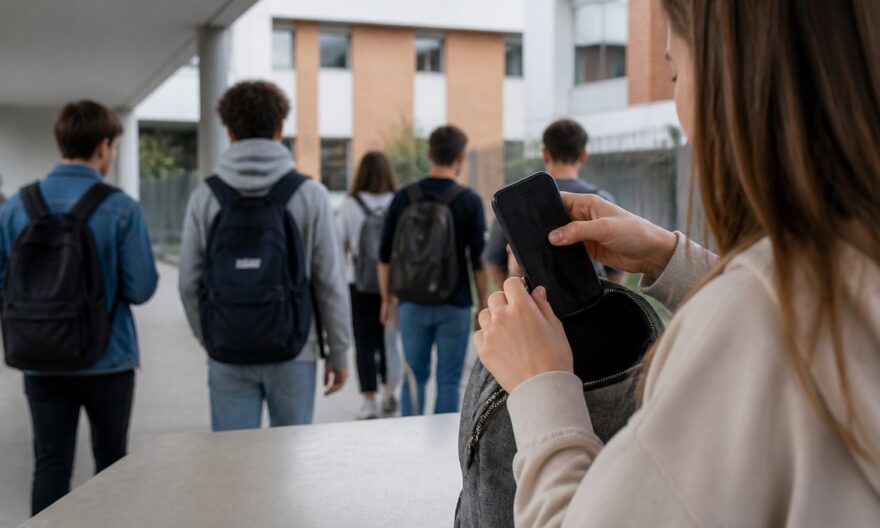
Starting from September 2026, French high schools will strengthen their internal regulations by banning the use of mobile phones. This decision is part of a law aimed at protecting young people from the dangers of social networks, extending a measure already in place in primary and middle schools. But how will the institutions adapt to this new rule?
The essentials to remember
- The law of August 24, 2026, bans mobile phones in high schools to limit addiction to social networks.
- Each institution must define its application methods, with options such as lockers or lockable pouches.
- Exceptions exist for medical reasons, and sanctions in case of violation are graduated.
Imagine walking through your high school courtyard without the constant buzz of notifications. You could finally hear your classmates’ laughter and exchange words without being distracted by a screen. This measure proposes a return to the basics of social interaction.
The law of August 24, 2026, and its objectives
The legislation adopted on August 24, 2026, aims to protect young people from the harmful effects of screens and social networks. This text amends the education code to extend the ban on mobile phones to high schools. The goal is to minimize students’ exposure to screens and counter social network addiction.
Already applied since 2018 in primary and middle schools, this ban is reinforced at the high school level. It follows a series of legislative consultations, including a bill adopted as early as January 2026 and a passage through the Constitutional Council.
Application methods in institutions
Each high school must integrate this ban into its internal regulations while defining practical methods. Three options are proposed: individual lockers to deposit phones, a collective box, or a lockable pouch that the student keeps with them. The former exception for the pedagogical use of phones is removed, leaving room for local management of this ban.
Institutions must also include in their project a section on digital uses, with awareness actions aimed at everyone: students, teachers, and parents.
Exceptions and sanctions provided
Exceptions to the ban exist, notably for students with specific medical needs. Institutions hosting post-baccalaureate classes, such as BTS or preparatory classes, can also define specific rules adapted to these students.
In case of non-compliance with this ban, the law provides for a series of graduated sanctions. The first step is the confiscation of the device. In case of recurrence, more severe disciplinary measures may be considered.
The challenges of implementation in French high schools
The implementation of this ban represents a logistical challenge for the 3,700 French high schools. Each institution must quickly define its rules before the start of the school year. This new rule could transform playgrounds, making them more lively and less quiet.
The impact of digitization on education
As digitization continues to transform the educational landscape, it raises questions about the balance between technological advantages and risks to mental health. French high schools must navigate between integrating digital tools into learning and protecting students.
Cybersecurity and data protection issues are also crucial. With online educational platforms like Moodle and Google Classroom, the use of students’ personal data becomes a major concern.
FAQ on the ban of mobile phones in high schools
What are the objectives of the mobile phone ban in high schools?
It aims to reduce screen exposure and limit social network addiction among young people.
How will high schools apply this ban?
Each institution will define its own methods, with options such as lockers or lockable pouches.
Are there exceptions to this ban?
Yes, for medical reasons or in institutions hosting post-baccalaureate classes.
What are the sanctions in case of violation?
Sanctions can range from confiscation of the device to more severe disciplinary measures.