
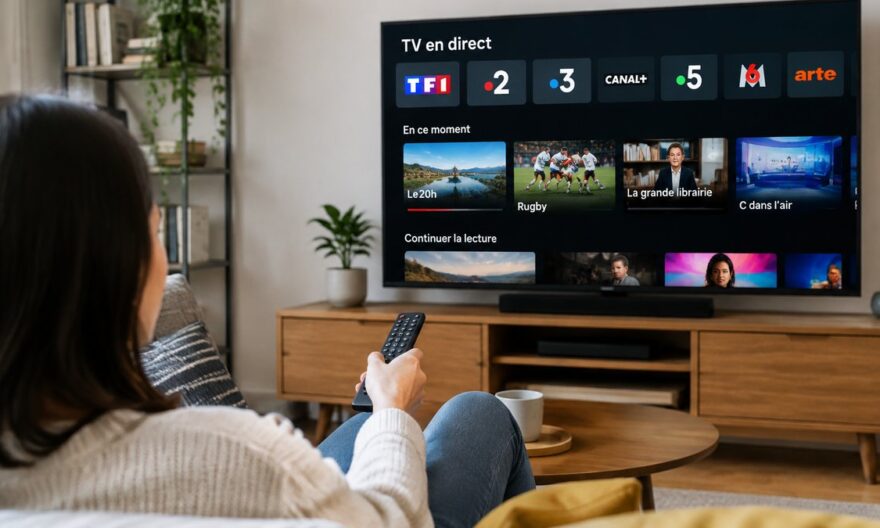
Photocall TV is a platform that centralizes live video streams from hundreds of television channels from different countries. While its success is undeniable, the question of the legality of its use raises many questions. To understand this point, it is useful to examine not only the legal aspects but also the technical mechanisms behind the distribution of content on this type of site.
What is Photocall TV and how does stream distribution work?
Photocall TV does not directly host the videos. It acts as a stream aggregator: it collects the URLs of streaming video streams broadcast on the channels’ servers, then makes them available through a single interface. These streams are generally broadcast according to standard streaming protocols such as HLS (HTTP Live Streaming) or MPEG-DASH.
These protocols segment the video into small chunks (usually 2 to 10 seconds), which are downloaded and played continuously by the video player. The player adapts the quality in real-time based on the available bandwidth (adaptive streaming).
Photocall TV indexes these streams by regularly retrieving their URLs, allowing immediate access to live programs without requiring downloads.
Legal aspects: broadcasting rights and geographical restrictions
Each television channel has exclusive rights to broadcast its content in certain territories. For this, it uses geoblocking systems based on the user’s IP address to limit access outside the authorized areas.
The Photocall TV site does not perform access control or rights verification. Thus, it may reference streams illegally accessible outside the intended geographical area. The use of these links can then be considered a violation of copyright or broadcasters’ rights.
The legality therefore depends on:
- The nature of the stream (officially accessible free stream or pirated stream)
- The user’s country (some countries are stricter than others)
- The usage (private viewing or redistribution)
Techniques used to bypass geoblocking
To access geographically blocked channels, users can use a VPN (Virtual Private Network). This service virtually changes the location of the connection by redirecting traffic through a server in another country.
The VPN masks the real IP address and assigns a new IP compatible with the area authorized by the broadcaster. Thus, the video stream server believes that the user is in the authorized country and delivers the content.
Quality VPNs use secure protocols (OpenVPN, WireGuard) to ensure confidentiality and speed, which is essential for smooth streaming without lag.
Technical issues related to video streams on Photocall TV
Several technical difficulties can impact the user experience on Photocall TV:
- Stream instability: free streams are often limited in bandwidth, causing interruptions or quality degradation.
- Incompatible audio/video formats: some streams use proprietary codecs (e.g., Dolby Atmos for sound) that the player or hardware cannot read correctly.
- Content blocking by DRM: digital rights management (DRM) prevents playback on unauthorized players, restricting usage to certified applications or devices.
- Latency and delays: live streaming experiences a delay between actual broadcast and reception, varying according to network quality and servers used.
READ ALSO Photocall TV no longer works in France: here’s how to access it
Security and privacy: points of attention
Accessing unofficial platforms like Photocall TV can expose the user to risks:
- Malicious ads: some sites exploit browsing to inject aggressive ads or even spyware.
- Exposure of personal data: without encryption or through dubious servers, data can be intercepted.
- DNS leaks: when the VPN is not properly configured, the DNS request can reveal the real location.
Using a reputable VPN and up-to-date antivirus is therefore recommended to protect against these risks.