
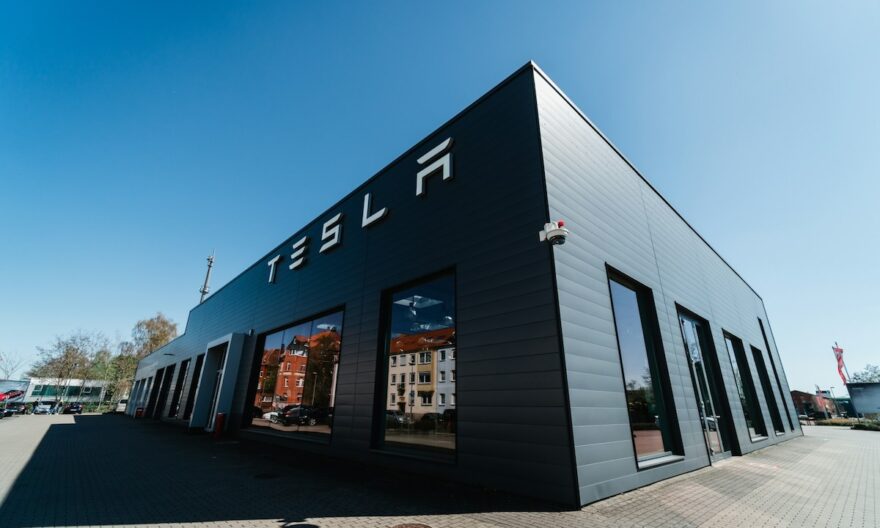
April 7, 2026 marks a new milestone for Tesla with the deployment of version 14.3 of its supervised autonomous driving system. This update promises to improve anticipation and reduce errors, relying on a complete rewrite of the artificial intelligence compiler. Discover how this evolution could transform the driving experience for early access program users.
Key Takeaways
- The new Tesla FSD v14.3 version reduces the system’s reaction time by 20% thanks to a rewrite of the AI compiler.
- Notable improvements are made to the vision encoder, offering better management of 3D geometry and low visibility scenarios.
- Users can expect a more responsive system in rare situations, thanks to continuous learning powered by the global experience of Tesla vehicles.
A Rewrite of the Artificial Intelligence Compiler
Tesla’s FSD (Full Self-Driving) version 14.3 represents a significant advancement thanks to a complete rewrite of the artificial intelligence compiler. Using the MLIR infrastructure, originally developed by Google, Tesla has reduced its system’s reaction time by 20%. At highway speeds, this translates into gains in terms of distance before an obstacle is encountered.
Chris Lattner, creator of MLIR and former leader of Tesla’s Autopilot team, expressed his enthusiasm on social media, considering this modern compiler approach as a long-awaited breakthrough for applications such as robotaxi and FSD.
Improvements to the Vision Encoder and Continuous Learning
Alongside the compiler rewrite, Tesla has improved its vision encoder. This update results in a better understanding of 3D geometry and an expanded reading of traffic signs. Additionally, undesirable behaviors such as sudden lane changes have been mitigated.
Continuous learning allows the system to take into account rare situations experienced by Tesla’s global fleet. These events, difficult to reproduce with traditional simulators, enrich the neural network and enhance proactive safety, particularly in managing complex intersections and unusual objects.
Towards Smoother and Safer Driving
Tesla plans further improvements for its FSD, including a pothole avoidance system and an extension of reasoning to various driving behaviors. Improving gaze tracking for the driver monitoring device is also under study, facilitating longer hands-free driving periods.
Despite these advances, Tesla emphasizes the supervised nature of its FSD system. The vehicle manual reminds that the driver must remain vigilant and ready to take control if necessary, or the vehicle will automatically slow down in case of negligence.
The Future of Artificial Intelligence in Automobiles
With the progress made by Tesla in the field of autonomous driving, the future of artificial intelligence in automobiles looks promising. The continuous improvement of AI systems, combined with advances in safety and comfort, paves the way for a new era of vehicles capable of understanding and adapting to driving conditions in real-time. The next challenges will include integrating these technologies into an evolving regulatory framework, ensuring safe and widespread adoption of autonomous vehicles.