
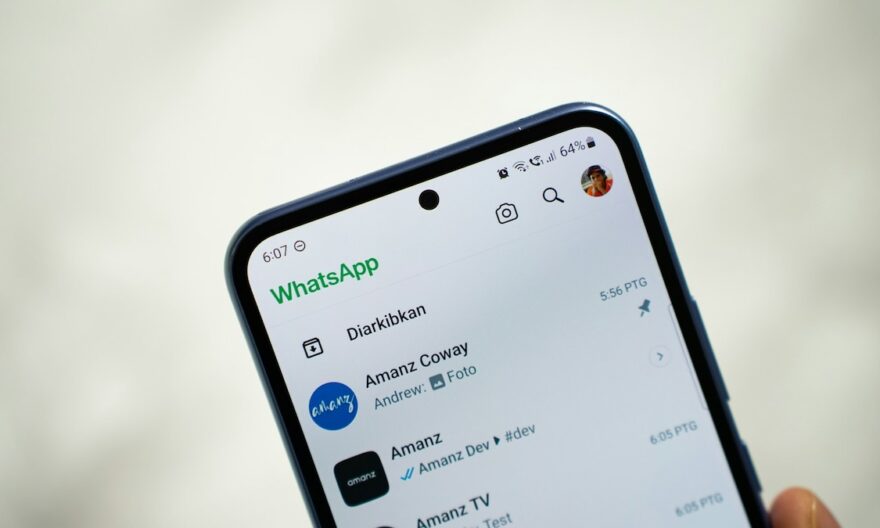
Do you remember those moments when you dreamed of an online experience without advertising interruptions? Meta seems to want to meet this aspiration by offering paid subscriptions for WhatsApp. But this initiative raises important questions about its legality in Europe. What happens if this approach contradicts the strict laws of the European digital market?
The 3 key points not to miss
- Meta is considering launching a paid subscription for WhatsApp to eliminate ads in Channels and Status.
- Meta’s “pay or consent” business model has already been sanctioned in Europe for Facebook and Instagram.
- WhatsApp, classified as a “very large platform” in Europe, must comply with the requirements of the Digital Services Act (DSA).
Meta’s ambitions for WhatsApp
Meta is exploring the idea of a paid subscription for WhatsApp, aiming to remove ads present in Channels and Status. This initiative is based on lines of code discovered in a recent version of the application, although the exact price of this subscription has yet to be confirmed. Current information suggests a cost of 4 euros per month.
This business model is not new for Meta, which has already implemented it on Facebook and Instagram. The principle is simple: offer users the choice between a paid subscription to avoid ads or accept personalized ads based on their personal data.
The challenges posed by the Digital Markets Act
The European Digital Markets Act (DMA) imposes strict constraints on large digital platforms, commonly referred to as “gatekeepers.” According to Article 5(2) of the DMA, these platforms must provide a free and equivalent alternative when a user refuses to share their personal data between different services.
Meta’s “pay or consent” model has already drawn criticism from the European Commission, resulting in a 200 million euro fine in 2025 for non-compliance. To avoid further sanctions, Meta must imperatively offer a free option with less personalized contextual ads on WhatsApp.
The implications of the VLOP classification
In 2026, WhatsApp was designated a “very large platform” (VLOP) by the European Union, exceeding 45 million monthly users. This classification implies increased obligations under the Digital Services Act (DSA), such as assessing systemic risks and implementing moderation mechanisms.
Meta must now comply with these requirements within four months, under penalty of fines that can reach up to 6% of its annual global turnover. This regulatory pressure reinforces the need for Meta to revise its business model to avoid heavy financial penalties.
Context of Meta and its business models
Meta Platforms, formerly known as Facebook, is one of the largest technology companies in the world, encompassing services such as Facebook, Instagram, and WhatsApp. Since its creation in 2004, the company has sought to monetize its platforms through various business models, including targeted advertising.
With the evolution of digital regulations in Europe, Meta faces growing challenges to adapt its strategies while complying with the laws in force. The subscription initiative for WhatsApp is part of this adaptation approach, although its implementation remains to be closely monitored by European authorities.