
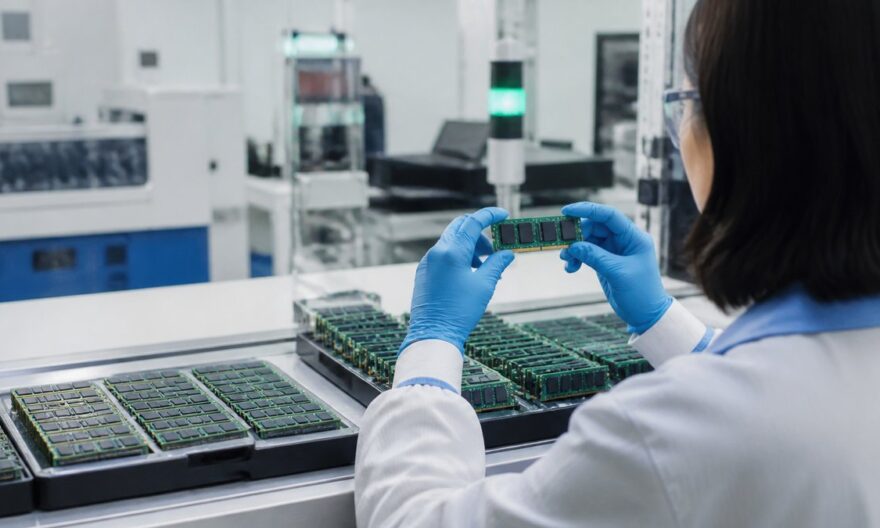
In the heart of a period of instability in the memory market, TrendForce announces that DRAM memory prices are expected to see a moderate increase of 13 to 18% in the third quarter of 2026, marking a lull after several quarters of spectacular increases. A development that could offer a slight respite to consumers and electronics manufacturers.
The essentials to remember
– DRAM memory prices are expected to increase by 13 to 18% in the third quarter of 2026.
– Major manufacturers are focusing on HBM memory production, leaving traditional DRAM behind.
– This situation benefits memory manufacturers but penalizes end consumers.
You may be among those scrutinizing TrendForce’s announcements, hoping for a sign of stabilization in the tumultuous world of DRAM memory. In recent months, prices have soared to historic levels, making the purchase of new devices costly. However, the forecast of a less marked increase could well be a sign of a gradual return to some normalcy.
Price stabilization: a moderate increase expected
TrendForce, known for its sharp market analyses, anticipates a DRAM price increase of only 13 to 18% in the third quarter of 2026. Although this increase is notable, it remains well below the impressive 50% increases recorded in previous quarters. This slowdown could signal a form of stabilization in a previously effervescent market.
The growing demand for more advanced memories, such as HBM (High Bandwidth Memory), contributes to this dynamic. Production giants like Samsung, SK Hynix, and Micron are redirecting their efforts, leaving traditional DRAM production to smaller players.
The consequences for manufacturers and consumers
For electronics manufacturers, this situation translates into higher costs and limited stocks. Even companies the size of Apple are struggling to secure enough DRAM memory, which inevitably impacts consumers, facing higher prices for electronic devices.
Despite this pressure, memory manufacturers are recording record profits, with a nearly 60% increase in revenue in one quarter. This strengthened bargaining power allows them to impose high prices, a trend that could continue in the coming years.
The impact on PC sales and manufacturers’ strategies
PC manufacturers, although affected by declining sales, manage to maintain their revenues through price increases and a shift towards premium products. Companies like HP have seen their sales drop, but the focus on high-end models helps offset this loss.
For consumers wishing to invest in new computers this year, the cost will inevitably be higher. TrendForce points out that consumers’ ability to absorb these price increases is reaching its limits, which could influence future purchasing decisions.
The development of HBM memory and its future implications
As traditional DRAM production decreases, interest in HBM memory continues to grow. Mainly used in data centers and demanding applications, HBM offers superior performance and increased bandwidth, positioning manufacturers at the forefront of technological innovation.
Advances in HBM memory could pave the way for new applications, particularly in the field of artificial intelligence and machine learning, where fast data processing needs are essential. This transition could also influence the production strategy of major market players.
The challenges of semiconductor supply and diversification strategies
The semiconductor sector faces considerable challenges, particularly due to growing demand and geopolitical tensions. Companies like TSMC and Intel are exploring diversification strategies to secure their supply and meet the needs of the global market.
The emergence of new technologies, such as 3D chips and field-effect transistors, could transform the industry by offering more efficient and compact solutions. However, the impact of these innovations on the supply chain remains a crucial question for the future of the sector.
FAQ on DRAM memory prices and market trends
What is the impact of rising DRAM prices on consumers?
Consumers should expect to pay more for electronic devices, as DRAM price increases are reflected in the final cost of products. Manufacturers are trying to offset these costs by focusing on high-end models.
How are memory manufacturers benefiting from the current situation?
Memory manufacturers are recording record profits thanks to rising prices and continued demand for advanced products. Their bargaining power has strengthened, allowing them to maintain high prices.
Why is traditional DRAM production decreasing?
Major manufacturers are focusing on HBM memory, which offers superior performance for data centers and demanding applications. This leads to a decrease in traditional DRAM production.
What is the future of HBM memory in the technology sector?
HBM memory is increasingly used in advanced applications, such as artificial intelligence and machine learning. Its development could open new opportunities and transform the production strategies of memory manufacturers.