
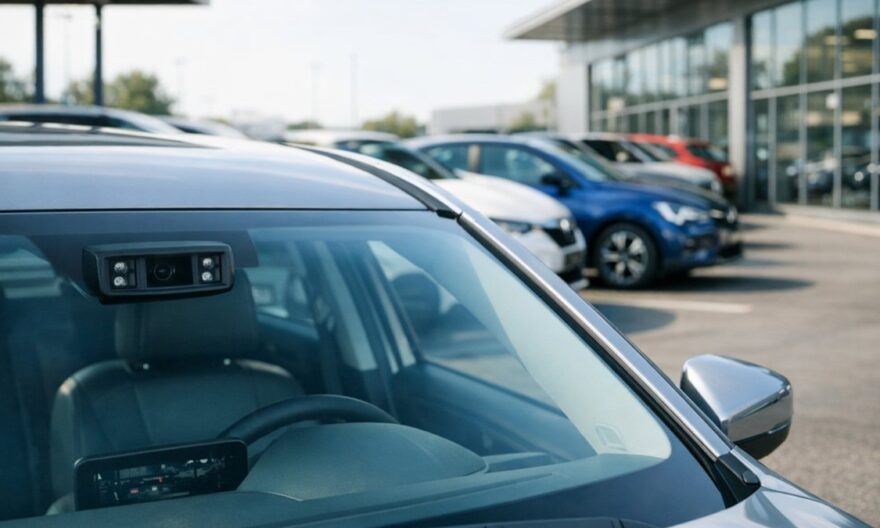
Since July 7, a new regulation is transforming the automotive industry in Europe. New cars registered in the European Union, including in France, will now have to integrate surveillance technology via an infrared camera. This device aims to enhance road safety by detecting dangerous behaviors at the wheel.
Imagine yourself behind the wheel of your new car, equipped with the latest safety technologies. You are on your way for a family weekend, confident thanks to this infrared camera watching over you. A brief distraction, a moment of drowsiness, and the technology activates to remind you to stay alert, thus ensuring the safety of all passengers. This is the future of driving, starting today.
The essentials to remember
- All new cars in Europe must have an infrared camera to monitor driver behaviors.
- The AEB technology becomes mandatory to detect and avoid collisions.
- The new safety devices have an additional cost ranging from 400 to 800 euros per vehicle.
Infrared camera for new cars
Since July 7, the European Union requires that all new cars be equipped with an infrared camera. These are placed near the rearview mirror, the steering wheel, or integrated into the driver’s cabin structure. Their role is to continuously monitor the driver’s eyes to detect signs of distraction or drowsiness. In case of an alert, the system emits an audible signal to refocus the driver’s attention.
AEB technology and road safety
Advanced Emergency Braking (AEB) is another innovation now mandatory on new vehicles. This system detects collision risks using radars and lasers and automatically triggers emergency braking. It operates from 10 km/h and helps protect pedestrians and cyclists, especially in urban areas where accidents are frequent.
Economic impact of these technologies
Although these technological advances improve safety, they also lead to an increase in the cost of new vehicles. Estimates indicate that these equipments can add between 400 and 800 euros to the purchase price of a vehicle. Some city cars might be exempt from these obligations to limit costs for consumers.
V-16 beacon: new standard in Spain
In Spain, a new regulation requires the installation of the V-16 beacon in vehicles from January 1, 2026. This emergency light is magnetically attached to the car roof to signal danger, gradually replacing the traditional warning triangle. This device offers increased safety in case of breakdown or accident, allowing drivers to stay safe inside their vehicle.
Towards a connected future of automotive safety
The recent integration of infrared cameras and AEB systems in new cars marks a step towards a future where technology plays a central role in road safety. Companies like Tesla or Waymo are investing heavily in artificial intelligence to develop autonomous vehicles, promising to further reduce accidents related to human error.
As the automotive sector continues to evolve, questions arise regarding the protection of personal data. Onboard surveillance systems collect sensitive information about driver behaviors. Privacy and data management become crucial issues that manufacturers will need to address to ensure consumer trust.
FAQ
What is the infrared camera in new cars?
It is a device installed in vehicles to monitor the driver’s eyes and detect potential signs of distraction or drowsiness.
What are the benefits of AEB technology?
AEB helps prevent collisions by detecting obstacles and automatically activating emergency braking, thus protecting pedestrians and cyclists.
Why is the V-16 beacon important?
It replaces the traditional warning triangle, offering increased visibility and allowing drivers to stay safe in their vehicle in case of emergency.
What is the economic impact of new safety technologies?
These technologies increase the cost of new vehicles by 400 to 800 euros, although some city cars might be exempt to avoid significant price hikes.