
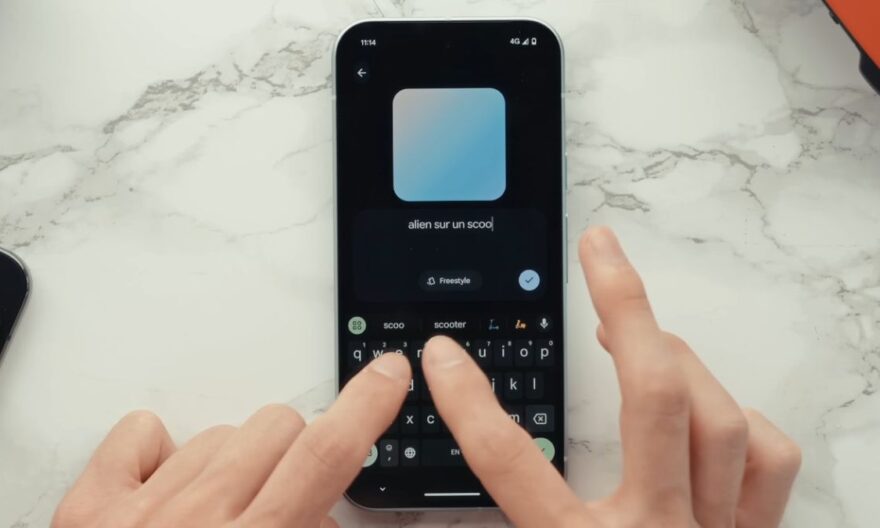
The Pixel 9a marks an important milestone for Google: the smartphone features a lightweight version of the Tensor processor, called Tensor Lite, designed to offer satisfactory performance while managing energy consumption.
This compromise is at the heart of the Pixel experience: enabling smooth usage, leveraging Google’s artificial intelligence features, and ensuring solid battery life, without aiming for the power records of high-end models.
Tensor Lite: design and features
Tensor Lite is based on the principles of Tensor architecture, but with adjustments to reduce consumption and heat:
- The number of performance cores is slightly reduced compared to the classic Tensor, but the AI-dedicated cores remain intact for advanced features.
- Finer engraving and software optimization maintain sufficient power for common applications, multitasking, and computational photography.
- Dynamic frequency management automatically adjusts power according to needs, avoiding unnecessary peaks and saving battery.
In summary, Tensor Lite aims to offer a smooth Pixel experience with a limited impact on battery life.
Raw performance: what the Pixel 9a can really do
Benchmarks show that the Pixel 9a does not match the Pro models, but remains performant for most uses:
- CPU and GPU scores are 20 to 30% lower than the Pixel 9 Pro, but still higher than many competing mid-range models.
- Everyday applications, multitasking, and video streaming are smooth and fast.
- More demanding tasks, such as some 3D games or intensive video processing, show some limitations but remain playable thanks to software optimization.
This compromise avoids excessive energy consumption while ensuring a satisfactory experience for the average user.
Artificial intelligence and photo processing: the Pixel advantage
One of Tensor Lite’s strengths lies in AI task management:
- Features like HDR+, Night Sight, or portrait mode fully benefit from the processor’s power.
- AI calculations are performed more efficiently, reducing battery load.
- Voice recognition and Google Assistant commands remain fast and reliable, even on Tensor Lite.
Thus, the Pixel 9a retains the Pixel DNA in photography and smart assistant, while limiting energy consumption.
Battery life: a real strength
Thanks to the combination of an optimized processor and dynamic power management:
- The Pixel 9a achieves on average 1.5 to 2 days of battery life for mixed use.
- Fast charging remains effective, with about 50% battery in 30 minutes, enough for a full day.
- Light tasks and smart standby modes help limit background battery drain.
This balance between power and efficiency is particularly interesting for those looking for a reliable smartphone without compromising on battery life.
Heat and thermal regulation: avoiding peaks
Tensor Lite produces less heat than high-end versions:
- Extended gaming or video sessions generate moderate temperature elevation, never uncomfortable for handling.
- The system automatically adjusts the performance cores’ frequency to avoid overheating.
- This regulation also helps preserve the battery and internal components’ lifespan.
Thus, even during intensive use, the smartphone remains comfortable and safe.
Comparison with mid-range competitors
The Pixel 9a stands out in its category:
- It surpasses most equivalent Android models in AI performance and photo processing.
- For standard tasks, it offers responsiveness comparable to some more powerful models, thanks to software optimization.
- The power/efficiency combination makes it attractive for users seeking a good balance between performance and battery life, without paying for extreme features.
This is a strong argument against smartphones that rely solely on raw power numbers.
Daily use: fluidity and comfort
In practice:
- Navigation, social media, messaging, and streaming remain smooth and fast.
- Demanding applications can be used, but with a slight compromise on the fluidity of the most demanding 3D games.
- AI functions allow automatic processing of photos and videos, making the user experience simple and effective.
The Pixel 9a shows that raw power is not always necessary for a satisfactory use, especially when well optimized.
Software optimization: the central role of Android
Tensor Lite also benefits from Android software optimizations:
- Intelligent RAM and background process management reduce consumption.
- Pixel updates ensure that performance remains stable over the long term.
- Photo and AI processing algorithms continue to improve through updates, even on a Lite processor.
This approach allows fully exploiting the available power without overloading the hardware.
Advantages and compromises: what the user should remember
The Pixel 9a offers:
- A complete Pixel experience with AI, photography, and integrated assistant.
- Solid battery life thanks to Tensor Lite and power regulation.
- Moderate heat even during intensive use.
In return:
- Maximum performance is slightly limited for very demanding games and applications.
- Some heavy professional uses might require a more powerful model.
For the majority of users, the power/efficiency compromise is ideal, combining satisfaction, battery life, and a complete Pixel experience.